

Table of Contents
- Start With the Movements You Actually Do
- How Should Yoga Pants Fit for Unrestricted Movement?
- The Best Fabric for Yoga Pants: What to Look For
- Yoga Pants That Stay in Place Through Every Pose
- Squat-Proof Yoga Pants: Testing Opacity Before You Buy
- Seams, Construction and Chafing: What Most Guides Skip
- Care, Durability and Sustainability: Verifying the Claims
- Conclusion: Build a Rotation, Not a Single Pair
- Frequently Asked Questions
Last Updated: October 5, 2026
Start With the Movements You Actually Do
Most people buy yoga pants for movement they wish they did, not the movements they actually do. That is the first mistake, and it costs money every time.

So before you look at a single pair, write down your real week. Not your ideal week. Your real one.
- Two slow yoga classes, mostly floor work
- One gym session with squats and lunges
- Daily walks and errands
- Occasional cycling
That list tells you more about the right pair than any size chart. At Stronger Living Shop, our yoga wear is crafted with intentional design and quality first, supporting your journey toward better health.
Match Fabric Weight to Your Practice
Lightweight fabric suits sweaty, fast movement. Heavier fabric suits slow, grounded work and cooler rooms.
- Hot yoga or running: thin, quick-drying fabric with good airflow
- Yin, restorative, or pilates: medium weight with a soft, brushed feel
- Gym and lifting: denser knit that holds shape under load
- Everyday wear: mid-weight with a smooth finish that works outside the studio
A common mistake is buying one pair for everything. It rarely works. The fabric that feels great in a hot class feels flimsy in a cold studio.
How Should Yoga Pants Fit for Unrestricted Movement?
Yoga pants should fit close to the body without pinching, with enough stretch to move through a full range of motion and a waistband that stays put. Nothing should dig in, ride up, or need adjusting mid-pose.

Here is the simple test. If you have to tug, pull, or rearrange during a pose, the fit is wrong. Full stop.
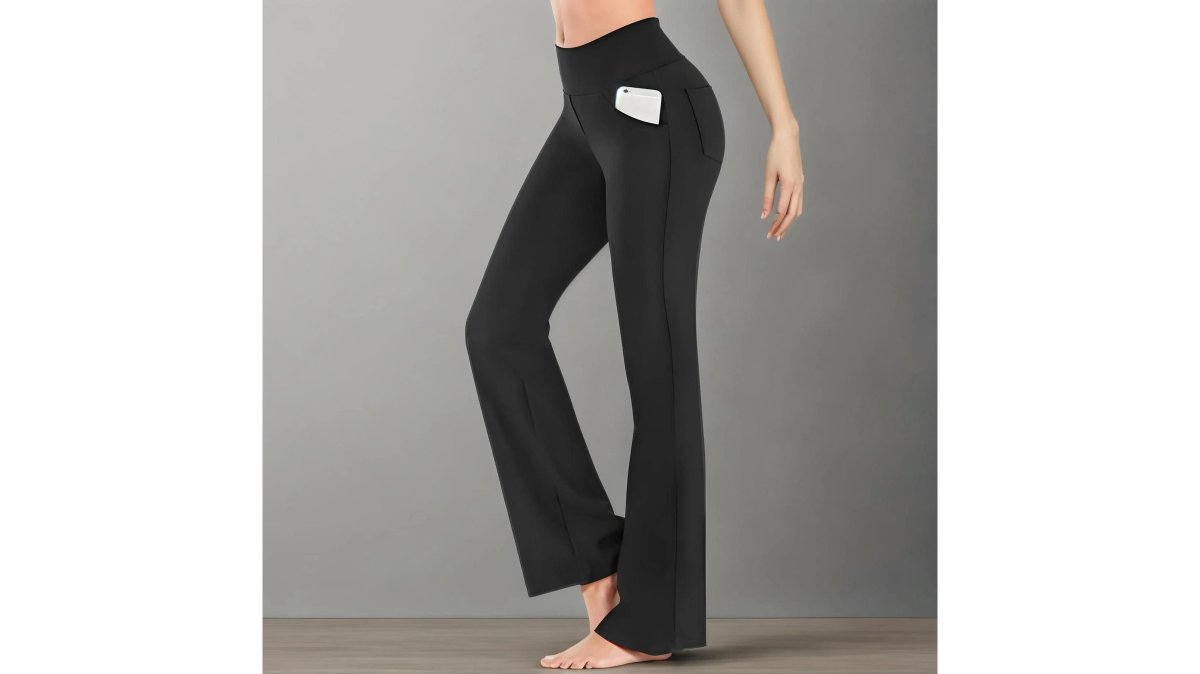
The Five-Minute Fitting Room Test
Try this before you buy. It takes five minutes and saves a lot of returns.
- Squat deep and hold for five seconds. Check for see-through fabric and waistband gaps.
- Step into a lunge. Feel for tightness behind the knee or at the hip.
- Bend forward and touch your toes. The waistband should not slide down.
- Raise both arms overhead. The crotch should not pull down.
- Twist side to side. The fabric should move with you, not bunch up.
If a pair fails any of these, put it back. A pant that fails in the fitting room will fail in class.
The Best Fabric for Yoga Pants: What to Look For
The best fabric for yoga pants is a blend, usually nylon or polyester with spandex for stretch. Pure cotton feels soft but sags and holds sweat. A blend keeps its shape, dries faster, and moves with you.
But "a blend" is not specific enough. The exact fiber mix changes how a pant behaves in downward dog, how long it lasts, and whether it feels cool or clammy in a hot room. Here is what each common fiber actually does, and where it falls short.
Fabric Composition and Trade-Offs
| Fiber blend | Feel | Stretch recovery | Breathability | Durability | Best for |
|---|---|---|---|---|---|
| Nylon + spandex | Silky, cool | Strong | Moderate | High | Hot yoga, running, sweaty flows |
| Polyester + spandex | Smooth, matte | Strong | Moderate to high | High | Gym, everyday wear, vigorous flows |
| Cotton + spandex | Soft, warm | Weak | Low when wet | Low to moderate | Restorative, yin, lounging |
| Nylon + polyester + spandex | Balanced | Very strong | Moderate to high | Very high | All-round use, mixed practice |
Nylon + spandex gives a cool, slick handfeel and excellent stretch recovery. It resists pilling and holds color well.
Polyester + spandex is the workhorse of activewear. It wicks moisture quickly, dries fast, and is durable.
Cotton + spandex feels wonderful against the skin and breathes well when dry. But cotton holds sweat, dries slowly, and loses shape under repeated stretch.
How Much Spandex Is Enough?
Look at the label. You want spandex in the mix, usually somewhere between a small percentage and a modest one. Too little and the pant loses shape at the knees and seat. Too much and it can feel slick or lose structure, and it may not hold compression as well.
A common pattern is that pants with very low spandex feel stiff and restrictive in deep poses, while pants with very high spandex feel stretchy but may bag out over time.
Compression, Recovery, and Breathability
Compression is not the same as tightness.
Breathability depends on both fiber and knit structure. A thin, open knit breathes better than a thick, dense one, but it may also be less opaque.
If you have sensitive skin, nylon and spandex blends tend to sit smoother than rougher polyester knits. Check the inner waistband too. That is where irritation usually starts.
Our Textile Exchange materials overview shows how fiber choice affects both feel and long-term durability.
Match Fabric to Your Practice
Use this as a starting point, then adjust based on your own body and preferences:
- Hot yoga or vigorous vinyasa: lightweight nylon or polyester with spandex, high breathability, quick-drying, dark color for opacity.
- Restorative or yin: medium-weight cotton blend or brushed nylon blend, soft handfeel, moderate stretch, no need for high compression.
- Gym and lifting: dense polyester or nylon blend with strong recovery, squat-proof opacity, and a structured waistband.
- Everyday wear and walking: mid-weight blend with a smooth finish, enough stretch for stairs and errands, and a cut that works outside the studio.
A common mistake is buying one pair for everything. It rarely works. The fabric that feels great in a hot class feels flimsy in a cold studio. If you must choose one pair, the nylon + polyester + spandex blend is the most versatile, but it will still be a compromise.
Yoga Pants That Stay in Place Through Every Pose
Yoga pants for movement that stay in place come down to two things: a wide, structured waistband and fabric with good stretch recovery. If either is weak, the pant will slip during downward dog or tug at the hips.
Women's Unique Yoga Pants Tummy Control High Waist Workout Running Seamless →
This is the single most common complaint we hear. And it is fixable.
Waistband Height and Stability
High-waisted and high-rise bands sit above the hip bone and stay there. A wide band spreads pressure instead of digging in. A narrow band rolls.
Look for:
- A double-layered band for extra hold
- A smooth, flat seam so it does not dig in
- Enough height to sit above the hip bone, not on it
- Tag-free labeling to avoid scratching
Our American College of Sports Medicine guidance on activewear notes that well-fitted gear lets athletes focus on movement instead of adjusting clothing. That is the whole point.
If you want a pair built around this, our Women's Unique Yoga Pants use a double-layered waistband and a soft, stretchy, non-see-through fabric that stays put when you bend.
Squat-Proof Yoga Pants: Testing Opacity Before You Buy
Squat-proof yoga pants stay fully opaque when you squat, bend, and stretch. Opacity comes down to fabric density and color, not thickness alone.
Here is how to test before you commit:
- Squat in bright light. Natural light shows more than fitting room bulbs.
- Check the back and knees. These stretch thinnest.
- Try the pant in a darker color. Dark tones hide more than light ones.
- Look at the fabric weight. Very thin knits show more, even in black.
A quick note on fit: sizing up can actually help. A pant stretched too tight pulls the fabric thin. If you are between sizes, size up for coverage.
Seams, Construction and Chafing: What Most Guides Skip
Seams decide how a pant feels after an hour of movement. Flatlock seams lie smooth against the skin. Raised or bulky seams rub, and rubbing turns into chafing.
Check these points before you buy:
- Gusset: a crotch panel that reduces pulling and friction
- Flatlock stitching: smooth, low-profile seams
- Seam placement: avoid thick seams right under the seat
- Contrast stitching: looks good, but check it sits flat
Seamless construction removes many of these issues entirely. Our 💪 Energy Seamless High-Waist Yoga Leggings use a seamless build for a smooth, chafe-free feel, plus four-way stretch and pockets.

The thing nobody tells you about chafing is that it usually shows up on longer sessions, not short ones. A seam that feels fine for ten minutes can rub raw after an hour.
Care, Durability and Sustainability: Verifying the Claims
Durability and sustainability claims are easy to make and hard to check. The honest approach is to read the care label and look for proof, not slogans.
To make pants last:
- Wash cold with like colors
- Skip the dryer or use low heat
- Avoid fabric softener, which coats fibers and reduces stretch
- Air dry when you can
For sustainability, look past the marketing. Check for fiber sourcing details and clear care instructions. A pant that lasts three years beats one that pills in three months, no matter what the tag says.
Conclusion: Build a Rotation, Not a Single Pair
Chasing one perfect pair is the wrong goal. Different movements need different fabric, weight, and support. A rotation covers more ground and each pair lasts longer.
So build a small set: one for hot, sweaty work, one for slow floor practice, and one for the gym and daily wear. Test every pair with the five-minute fitting room check before you commit.
At Stronger Living Shop, our yoga wear is made with intentional design and quality first, so you feel strong and move freely. Explore our high-waist yoga pants with four-way stretch and tummy control for the gym-to-office days.
Add a pair built for your real movement, and stop thinking about your pants mid-pose.
Frequently Asked Questions
How should yoga pants fit for movement?
They should feel snug but not tight, with the waistband sitting flat against your lower back and no gaping at the hips. You should be able to slide two fingers under the waistband, squat, and stand without the fabric digging in or sliding down. If you have to tug them up after a forward fold, the size or rise is wrong. Most brands recommend taking your normal size, but check each size chart because one label's medium is another's small.
What fabric is best for yoga pants?
Nylon and spandex blends hold shape and stay opaque through deep bends, which is why they dominate squat-proof yoga pants. Polyester blends dry fast and resist pilling but can feel less soft against skin. Look for four-way stretch and a weight that feels substantial between your fingers, not thin enough to see light through. Avoid fabric that feels slick and papery; it tends to show every seam line and lose stretch after a few washes.
How can you tell if yoga pants are squat-proof before buying?
Do the squat test in good lighting. Squat deeply facing a mirror and check whether you can see your hand through the fabric behind you. Stretch the material over your knee and look for a colour shift from black to grey, which signals thin fabric. If you are shopping online, check whether the listing states the leggings are opaque during movement and what the fabric composition is. A high spandex content with a double-layered waistband is a strong indicator.
How do you keep yoga pants from rolling down during class?
Choose a high-waisted or high-rise cut with a wide, double-layered waistband rather than a thin elastic band. The band should sit at your natural waist, not below your hip bones. Fabric matters too: smooth, high-elastic material with good recovery grips better than loose knit. If your current pair still rolls, size down one or switch to a style with a wider band. Rolling usually means the waistband is too narrow for the weight of the fabric.