

Quick Summary
The best recovery tools for people who work night shifts match the problem you feel most: a blackout eye mask and earplugs for daytime sleep, compression sleeves or boots for tired legs, and a massage gun or heated neck massager for tight shoulders. Start with light control and a consistent sleep window before buying anything else.
- Daytime sleep trouble usually starts with light, so begin with a blackout eye mask.
- Check that any eye mask fits well, since a poor fit wakes you more than it helps.
- Compression sleeves or boots suit workers who stand for long shifts.
- Melatonin can interact with blood thinners and some other medications, so check with a clinician first.
- Track sleep onset, total sleep and alertness for two weeks before judging any aid.
Table of Contents
- Why Night Shift Recovery Is Harder Than It Looks
- How to Choose a Recovery Tool for Your Shift Pattern
- Best Sleep Aids for Night Shift Workers
- Physical Recovery Tools for Legs, Neck and Muscles
- Building Your Night Shift Survival Kit
- Switching Back to Days and Staying Healthy on Nights
- Choosing Your First Recovery Tool This Week
- Frequently Asked Questions
Why Night Shift Recovery Is Harder Than It Looks
Night shift recovery is harder than it looks because the body keeps its daytime clock while the job asks for nighttime alertness.
Light is the main reason. Sunlight through a bedroom window tells the brain it is time to wake, which works against the long daytime sleep that night workers need.
Physical strain adds another layer. Long hours on your feet, lifting, or sitting still can leave the legs and neck stiff by the end of a shift.
How to Choose a Recovery Tool for Your Shift Pattern
Choose a recovery tool by matching it to the problem you feel most often: poor daytime sleep, stiff legs or sore neck and shoulders. Rotating shifts, fixed nights and short night stints each place different demands on the body.
A simple way to decide:
- Daytime sleep trouble: start with light control, such as a blackout eye mask.
- Leg fatigue after long standing shifts: look at compression or circulation tools.
- Neck and shoulder tension: a heated massager suits workers who sit at a desk or drive for long periods.
- Mind racing before bed: a sleep guide or a wind-down routine may help more than another device.
Best Sleep Aids for Night Shift Workers
Sleep aids for night shift workers fall into two very different buckets: sensory tools that make daytime sleep possible, and ingestible aids that try to shift or deepen sleep. Competitors tend to blur these together, so this section separates them by purpose, evidence quality, and safety.
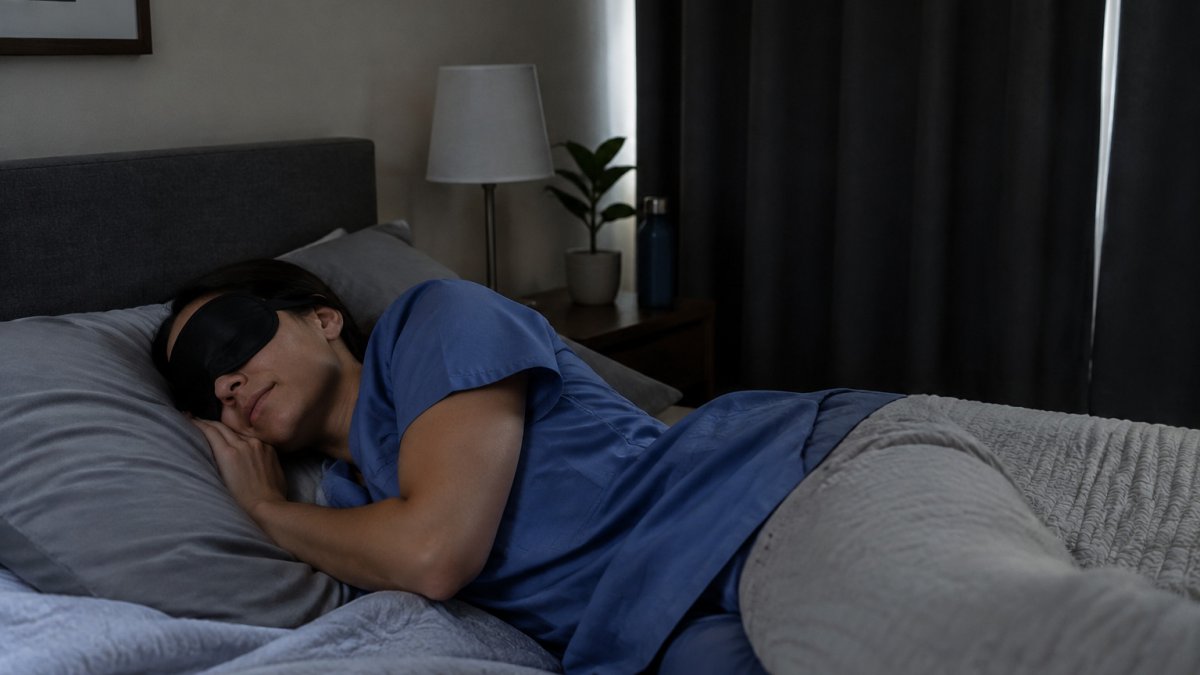
Sensory tools: eye masks, earplugs, and white-noise
Daytime sleep is often shorter and lighter mainly due to light and noise, so sensory controls are a practical place to start. For side sleepers, a contoured 3D mask keeps fabric off the eyelids; for back sleepers, a flat mask with an adjustable strap is usually enough.
Watch out: an eye mask that presses on the eyes or a strap that loosens overnight will wake you more than it helps; fit matters more than fabric technology.
Melatonin: what the evidence supports and what it does not
Watch out: melatonin can interact with blood thinners, some blood-pressure medications, and immunosuppressants, and it is not recommended without clinician guidance during pregnancy or for people with autoimmune conditions; treat it as a scheduling tool, not a nightly habit.
Other sleep supplements and sleep aids
Products containing valerian, magnesium, glycine, or antihistamines appear in many night-shift guides, but the evidence is uneven. Magnesium and glycine have limited, mostly small-study support for sleep quality; valerian results are mixed; and sedating antihistamines can cause next-day grogginess that is dangerous on a commute or at the wheel. None of these replace light control and a consistent sleep window, and all of them deserve a conversation with a pharmacist or clinician if you take other medication.
A practical comparison by use case
- If your main problem is falling asleep in daylight: start with a blackout eye mask, earplugs, and a dark, cool room.
- If you are already taking prescription medication: check with a clinician before adding any new product.
Budget and non-product alternatives
You do not need to spend much to improve daytime sleep. A drugstore eye mask, foam earplugs, and a folded towel over the window blind cover most of the sensory problem for a few dollars. Free behavioral strategies, such as a consistent wind-down routine, keeping the phone out of the bedroom, and asking household members to respect a quiet window, often outperform expensive gadgets.
How to tell whether a sleep aid is working
Track three things for two weeks: how long it takes you to fall asleep after your shift, total sleep duration, and how alert you feel at the start of the next shift. A tool that shortens sleep onset but leaves you groggy is not a win. If nothing changes after two weeks of consistent use, drop it rather than stacking another aid on top.
The table below sorts the sleep aids covered above by purpose and the key caution for each.
| Aid | Best for | Key caution |
|---|---|---|
| Blackout eye mask | Blocking light for daytime sleep | Poor fit lets light in or wakes you |
| Earplugs and white noise | Masking household and street noise | Keep volume low and steady |
| Melatonin | Shifting sleep timing | Interacts with blood thinners and other medication |
| Valerian, magnesium, glycine, antihistamines | Varies; evidence is uneven | Antihistamines can cause next-day grogginess |
| Tracking sleep and alertness | Judging whether an aid works | Drop an aid if no change after two weeks |
Physical Recovery Tools for Legs, Neck and Muscles
Physical recovery tools for night shift workers should be chosen by the specific strain your shift creates, not by which device looks most impressive. Standing shifts load the calves, feet, and lower back; desk and driving shifts load the neck, shoulders, and hips; lifting shifts load the back and grip. This section compares the main tool categories by mechanism, best use case, cost tier, and limitations, so you can match a tool to your body rather than to a product page.
Compression boots and sleeves
Watch out: compression devices are not appropriate for people with certain circulation or clotting conditions without medical advice; check before buying if you have vascular disease or a history of blood clots.
Massage guns and handheld massagers
Massage guns deliver rapid percussive pressure to a targeted area and are best for neck, shoulder, and back tension rather than whole-leg recovery. They are mid-priced, cordless, and easy to use after a shift, but they require some judgment: too much pressure on the neck or spine is counterproductive. Look for adjustable speed, interchangeable heads, and an auto shut-off. They are a good fit for desk and driving workers with upper-body tightness.
Nicebeam RecoveryFlow Compression Boots →
Heat and massage combination tools
Heated neck and shoulder massagers combine warmth with kneading, which many workers find relaxing before sleep. They are mid-priced and best for upper-body tension, but they are less useful for legs and feet, and the heat element means they should not be used on numb skin or while falling asleep.
Massage balls and foam rollers
The limitation is that they require some technique and are less effective for deep, widespread tension than powered devices.
A comparison by use case and budget
- Standing all shift, heavy legs: compression boots or sleeves are the most targeted option; start with sleeves if budget is tight.
- Desk or driving, tight neck and shoulders: a massage gun or heated neck massager is the better match.
- Lifting and general stiffness: a massage ball or foam roller plus a consistent stretching routine covers most needs at low cost.
- Tight budget: massage ball and foam roller first; add a massage gun only if upper-body tension persists.
- Premium budget: compression boots are worth it only if you will use them several times a week.
Non-product alternatives that often work as well
Elevating the legs after a shift, a short walk before sleep, gentle stretching, and a warm shower cover much of what these devices do for free. For a low-cost manual option, you can browse a portable gua sha massage tool for tight necks and legs. None of these tools replace sleep, and none should be used as a reason to shorten your sleep window.

How to measure whether a physical recovery tool is working
Track leg heaviness, neck and shoulder stiffness, and how rested you feel at the start of a shift, using a simple one-to-five rating for two weeks. A tool that improves the rating is worth keeping; one that does not is worth returning or reselling. This simple record is more useful than any product claim.
Building Your Night Shift Survival Kit
A night shift survival kit gathers the sleep, recovery and hydration tools you use most into one place, so you are not searching for them after a long shift.
A practical kit might include:
- A blackout eye mask, such as the Activated Carbon Sleep Eye Mask, for daytime sleep; you can also get a Bagby night sleep mask for blocking daylight.
- A massage ball or handheld massager for quick relief before bed, or a full-body heated massage mat for longer rest breaks.
- A large insulated water bottle, such as the HYDROJUG 40 OZ. Traveler, to keep fluids up across a shift
- A written wind-down routine, which can be as simple as dimming the lights and putting your phone away an hour before sleep
Keep the kit near your sleeping space and pack a smaller version for your bag.


Switching Back to Days and Staying Healthy on Nights
Switching between night and day schedules takes time, so plan transitions around your days off where possible.
When you finish your last night shift, keep the bedroom dark during your morning sleep and avoid bright light on the commute home.
Hydration matters across the whole cycle. A reusable bottle makes it easier to drink steadily instead of catching up at the end of a shift.
Choosing Your First Recovery Tool This Week
Start with your biggest problem. If you are weighing whether a smart sleep tracker is worth buying, read our full evaluation of smart sleep trackers before committing to a first tool. If you struggle to sleep in daylight, the Activated Carbon Sleep Eye Mask is one option to consider.
Use one tool for a couple of weeks and track how you feel: how long you sleep, how rested you wake and how your legs or neck feel at the end of a shift.
Frequently Asked Questions
How do night shift workers sleep during the day?
Make the bedroom as dark, quiet and cool as you can. Blackout curtains and a well-fitted sleep mask block light, which is the main signal that tells your body it is time to wake up. A fan or white noise machine covers daytime traffic and neighbours. Keep your phone out of reach and tell the household your sleep window. Many workers find that a short wind-down routine after the shift, such as a shower and dim lights, helps them fall asleep faster. Aim for a consistent sleep block of seven to nine hours where possible.
What should be in a night shift survival kit?
A practical kit covers sleep, alertness and physical comfort. Include a sleep mask, earplugs, and a compact sound source for daytime sleep. Add a refillable 40 oz insulated bottle so you can keep up with fluids through the shift. A foam massage ball or a neck and shoulder massager helps with tension at the end of a long stretch. Keep healthy snacks, a light meal plan and a copy of your sleep schedule in the bag so you are not relying on vending machine food at 3 a.m.
How do I switch back to days after night shift?
Switching back takes a few days and the most effective step is light management. Get bright daylight when you wake on your days off and avoid bright light on the way home from your last night shift. Keep your sleep and meal times consistent, even on days off, to avoid a constant jet lag feeling. Short naps of about 90 minutes can bridge the gap, but avoid long naps late in the day. Caffeine should stop several hours before your planned sleep time.
Which recovery tools help most after a long night shift?
For sleep, a blackout eye mask and a sleep routine guide are the simplest starting points. For tired legs, sequential compression boots with adjustable pressure and a timer are one option after long hours on your feet. For tight shoulders and neck, a heated massager or a targeted massage ball are other options. Choose based on your main complaint rather than buying everything at once, and track whether the tool makes a noticeable difference over a few weeks.
Stronger Living Shop offers sleep masks, massagers, compression boots and sleep guides designed to help you feel strong and rest well between shifts. Start with one tool that addresses your biggest recovery need and build from there.
