

Table of Contents
- Why Non Synthetic Yoga Leggings Matter in 2026
- Quick Comparison: Best Non Synthetic Yoga Leggings
- 1. Women's Bamboo Viscose/Cotton Capri Style Leggings: Best for Softness and Odor Control
- 2. Hip-Lifting Sweatpants Leggings: Best Budget Non Synthetic Option
- 3. Eco-friendly Recycled Fabric Contrast Yoga Pants: Best for High-Intensity Performance
- The Benefits of Non-Synthetic Activewear for Yoga and Daily Wear
- How to Wash Organic Cotton Leggings and Natural Fiber Yoga Pants
- Breathable Yoga Pants for Sensitive Skin: What to Look For
- Frequently Asked Questions
Last Updated: October 2, 2026
Why Non Synthetic Yoga Leggings Matter in 2026
Most leggings on the market are built from polyester, nylon, and elastane blends, and they feel fine for the first hour. Then the sweat sits against your skin, the odor sets in, and the fabric starts to pill. That is the trade-off synthetic fabrics make, and more yogis are deciding it is not worth it. Non synthetic yoga leggings are built from plant-based or recycled fibers instead, and they manage moisture and odor differently because of how those fibers are structured, not because of a chemical finish applied on top.
Quick Comparison: Best Non Synthetic Yoga Leggings
| Leggings | Fabric | Price | Best For |
|---|---|---|---|
| Bamboo Viscose/Cotton Capri | 60% bamboo viscose, 25% organic cotton, 15% spandex | $63.99 | Softness, odor control |
| Hip-Lifting Sweatpants Leggings | Cotton blend | $32.84 | Budget buyers |
| Recycled Contrast Yoga Pants | 90% nylon, 10% elastane | $82.99 | High-intensity training |
1. Women's Bamboo Viscose/Cotton Capri Style Leggings: Best for Softness and Odor Control
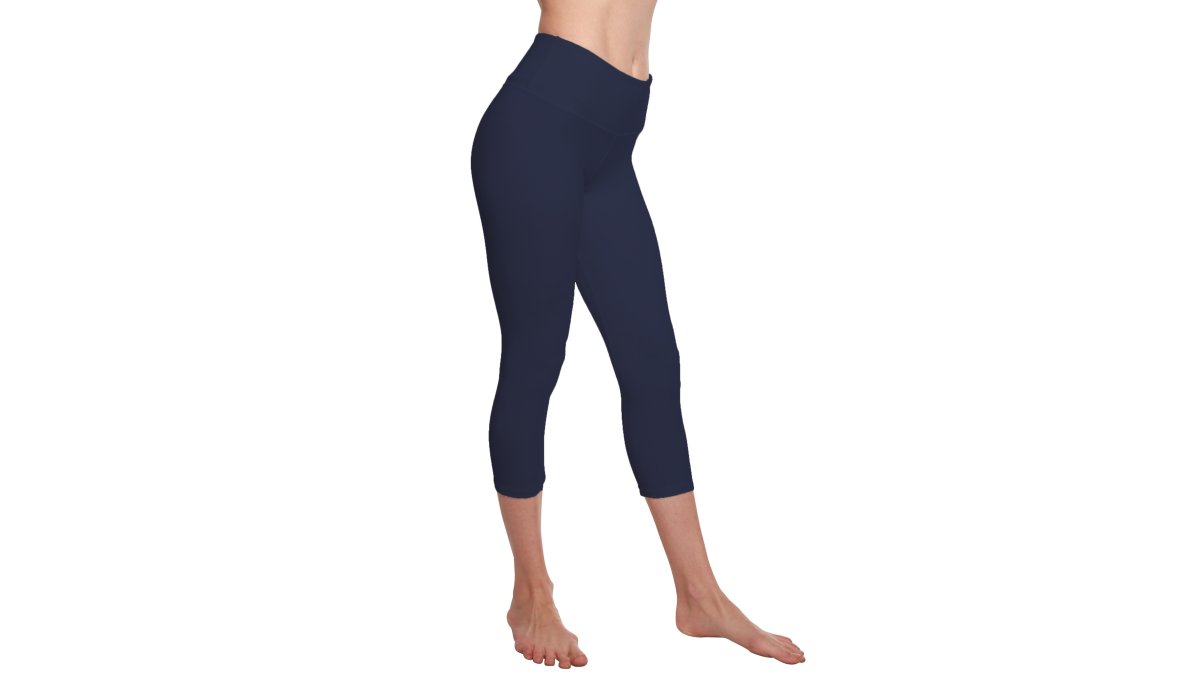
The Women's Bamboo Viscose/Cotton Capri Style Leggings are our top pick for everyday yoga and daily wear. The blend is 60% viscose from bamboo, 25% organic cotton, and 15% spandex, which gives you the softness and moisture control of bamboo with the stretch and recovery you need in a flow class. They come in Black and Cream, and Navy Blazer, in sizes Small through XXL.

Fabric Breakdown and Stretch Recovery
A common mistake with bamboo and cotton blends is assuming they will stretch out after a few wears. The 15% spandex content here is what holds the shape. What most guides miss is that recovery depends on the spandex percentage, not the plant fiber. Below 12% spandex, cotton-heavy leggings tend to bag at the knees and waist. This pair sits in the sweet spot.
Pros and Cons
Pros:
- Bamboo viscose and organic cotton blend resists odor naturally
- Mid-weight jersey fabric holds shape through repeated wear
- Capri length works for hot yoga and warm-weather daily wear
Cons:
- Higher price than synthetic alternatives
- Limited color range compared to mass-market brands
2. Hip-Lifting Sweatpants Leggings: Best Budget Non Synthetic Option
The Hip-Lifting Sweatpants Leggings are the pick if you want a cotton-blend pair without spending much. At $32.84, they are roughly half the price of the bamboo capris. The design focuses on hip lift and a slim fit, with breathable cotton-blend fabric that suits light yoga, walking, and lounging. They come in white, gray, black, yellow, green, 28 pink milk silk sanded fabric, 28 gray milk silk sanded fabric, 28 black milk silk sanded fabric, 28 green milk silk sanded fabric, 38 light purple, 38 Navy blue, 38 deep purple, 28 color butterflies, 28 leopard print, 28 pink without velvet, in sizes S through XXL.

Fabric Options and Sizing Notes
This style ships in two fabric types, and the sizing runs differently between them. The first type is milk silk brushed fabric. The fabric is more elastic, the size is large, and the price is 28 loose yoga pants. The second type is polyester double-sided single-brushed fabric with super elastic fabric, small size, and price 38 Tight-fitting yoga pants. Neither option is fully synthetic-free, so treat this as a budget entry point rather than a strict natural-fiber pick.
Pros and Cons
Pros:
- Lowest price in the lineup
- Wide color and print selection
- Breathable enough for light practice
Cons:
- Not a fully natural fiber blend
- Sizing varies by fabric type, so check before ordering
3. Eco-friendly Recycled Fabric Contrast Yoga Pants: Best for High-Intensity Performance
The Eco-friendly Recycled Fabric Contrast Yoga Pants target performance over softness. The fabric is 90% Nylon/Polyamide and 10% Elastane/Spandex, with high elasticity and a knit weave that moves with you. At $82.99, they are the most expensive pair here, and they are built for running, HIIT, and hot yoga where compression matters more than a natural feel. Sizing runs true, from XS to 2XL, with a size chart in both inches and centimeters.

Stretch, Compression, and Squat-Proof Testing
Squat-proof comes down to opacity under stretch, and that depends on fabric weight and knit density. At 200 g, this pair is dense enough to hold coverage through deep poses. The high elasticity means the fabric returns to shape rather than thinning out at the hip. If you have had leggings go sheer in downward dog, the issue was usually a light, loosely knit fabric. This one is not that.
Pros and Cons
Pros:
- Dense 200 g knit holds coverage in deep poses
- High elasticity supports running and HIIT
- Made from recycled fabric
Cons:
- No pockets
- Highest price in the lineup
The Benefits of Non-Synthetic Activewear for Yoga and Daily Wear
Non-synthetic activewear is clothing made primarily from plant-based or recycled fibers rather than virgin polyester and nylon. The practical benefits show up in three areas: moisture management, odor, and skin comfort. Bamboo viscose and organic cotton move sweat away from the body and dry without trapping bacteria the way synthetics can. For anyone with sensitive skin or a history of irritation from synthetic fabrics, that difference is often the deciding factor.
Women's Bamboo Viscose/Cotton Capri →
How to Wash Organic Cotton Leggings and Natural Fiber Yoga Pants
Natural fiber activewear fails differently than synthetic activewear. Polyester and nylon are essentially plastic, they do not shrink, they do not pill from fiber breakage, and they do not biodegrade. Cotton, bamboo viscose, and lyocell are cellulose fibers. They absorb water, they swell, they abrade, and they break down over time. That means the care routine that keeps a synthetic legging alive for years will destroy a natural fiber legging in months.
The Cold Water Rule (and Why Heat Is the Enemy)
Wash natural fiber leggings in cold water, 30°C (86°F) or below, on a gentle or delicate cycle. Two things happen when you use hot water. First, cotton fibers swell and the fabric shrinks; a 100% cotton legging can lose 3-5% of its length in a single hot wash. Second, elastane (spandex) degrades. Heat breaks the polyurethane bonds in elastane, and once those bonds fail, the fabric stops recovering.
Turn Inside Out, Skip the Softener
Turn leggings inside out before washing. The inside surface is where pilling starts, because that is where the fabric rubs against itself and against your skin. Washing inside out reduces surface abrasion on the outer face, which is the side people see.
Why Pilling Happens (and How to Prevent It)
Pilling is not a sign of low-quality fabric. It is a mechanical process. Short fibers work their way to the surface of the fabric, tangle into small balls, and stay attached until they are pulled off or worn away. Two things accelerate it: friction and heat.
Drying and Storage
Lay flat or hang to dry. Direct sunlight will fade natural dyes faster than synthetic dyes, so dry indoors or in shade if color retention matters to you. Store folded, not hung, to avoid stretching the waistband over time.
End-of-Life: What to Do When They Wear Out
This is where natural fiber leggings pull ahead of synthetics, and where most guides stop short.
- Blends with 10% or more elastane: Not compostable. Elastane does not biodegrade at any meaningful rate. These should go to textile recycling, brands like For Days and programs like Retold Recycling accept worn activewear, and some municipalities include textiles in curbside recycling.
- Recycled nylon and elastane blends: Not compostable and not widely recyclable at curbside. Textile take-back programs are the best option.
Breathable Yoga Pants for Sensitive Skin: What to Look For
Breathable yoga pants for sensitive skin should be free of the finishes and dyes that trigger irritation. Look for GOTS-certified organic cotton or OEKO-TEX certified fabrics, which test for harmful substances. Avoid leggings with heavy screen prints or synthetic liners, since those are common irritants. Bamboo viscose, lyocell, and merino wool are all worth considering for their moisture management and soft hand feel.
Frequently Asked Questions
What leggings don't have microplastics?
Leggings made from natural fibers like organic cotton, bamboo viscose, merino wool, and lyocell do not shed microplastics during wear or washing. Synthetic fabrics such as nylon and polyester release tiny plastic particles with every wash cycle. Choosing non synthetic yoga leggings made from plant-based or animal-based fibers reduces microplastic pollution in waterways. Look for GOTS-certified organic cotton or OEKO-TEX certified bamboo blends to ensure the fabric is free from harmful chemical treatments as well.
Are organic cotton leggings good for high-intensity yoga?
Organic cotton leggings work well for low to moderate intensity yoga, but they absorb moisture rather than wick it away. For hot yoga or high-intensity flows, a blend with elastane or spandex provides better stretch recovery and moisture management. The Women's Bamboo Viscose/Cotton Capri Style Leggings combine 60% bamboo viscose, 25% organic cotton, and 15% spandex, which gives you the breathability of natural fibers with enough stretch for dynamic poses. Pure cotton alone tends to lose shape during vigorous movement.
How do I wash organic cotton leggings without ruining them?
Turn your organic cotton leggings inside out and wash them in cold water on a gentle cycle. Use a mild, plant-based detergent without bleach or fabric softeners, which coat natural fibers and reduce breathability. Skip the dryer and lay them flat to air dry away from direct sunlight. This preserves the elastane blend and prevents shrinkage. If you must machine dry, use the lowest heat setting. Following these steps keeps the fabric soft and extends the life of your non synthetic yoga leggings.
What is the healthiest material for yoga pants?
Organic cotton, bamboo viscose, lyocell, and merino wool are among the healthiest materials for yoga pants. They allow airflow, manage moisture without trapping bacteria, and are less likely to irritate sensitive skin than synthetic fabrics. Bamboo viscose offers natural odor control, while organic cotton is hypoallergenic and breathable. Look for certifications like GOTS or OEKO-TEX Standard 100 to confirm the fabric is free from PFAS, heavy metals, and other harmful substances. These certifications matter more than the fiber name alone.
Do non-synthetic leggings stay in place during yoga?
Yes, if the fabric blend includes enough elastane or spandex for stretch recovery. Pure natural fibers without any stretch component tend to sag and slip during downward dog or warrior poses. A blend like 60% bamboo viscose, 25% organic cotton, and 15% spandex gives you the breathability of natural fibers with the compression and recovery needed to stay put. High-waisted designs also help prevent slippage. Check the fabric composition before buying, since a small percentage of elastane makes a significant difference in fit.
Finding leggings that stay put, breathe, and do not irritate your skin usually means paying attention to fiber content, not marketing. Stronger Living Shop carries a curated set of non synthetic yoga leggings built around intentional design and quality-first fabrics, from the bamboo viscose and organic cotton capris to the recycled contrast pants. Browse the collection and find the pair that fits how you actually move.