

Table of Contents
- Why Sensitive Skin Requires Specific Fabrics
- Top Natural Fabrics for Sensitive Skin
- Benefits of Bamboo Fabric for Sensitive Skin
- Fabrics to Avoid for Sensitive Skin
- Best Non-Synthetic Yoga Leggings 2026
- How to Wash Clothes for Sensitive Skin
- Chemical Finishing and Processing: What Matters
- Breathability, Moisture-Wicking, and Thermal Regulation
- Frequently Asked Questions
Last Updated: September 30, 2026
Why Sensitive Skin Requires Specific Fabrics
Your skin's barrier function is under constant assault. Synthetic materials trap heat and moisture, creating an environment where irritation thrives. Natural, breathable fabrics allow your skin to regulate temperature and release sweat before it accumulates, which is why the best breathable fabrics for sensitive skin matter so much.
Sensitive skin isn't just uncomfortable, it's a sign that your skin barrier is compromised. When you wear the wrong fabrics, friction increases irritation, synthetic dyes and chemical finishes penetrate more easily, and moisture builds up against your skin. The result is redness, itching, and sometimes painful flare-ups that last for days.
At Stronger Living Shop, we understand that choosing the right fabric is as important as choosing the right skincare routine. The material touching your skin all day influences whether you'll experience irritation or comfort. Breathable, natural fibers allow air circulation, prevent moisture accumulation, and reduce the friction that triggers dermatitis and eczema flare-ups.
Top Natural Fabrics for Sensitive Skin
The foundation of comfort for sensitive skin starts with understanding which natural fibers actually deliver on their promises. Not all "natural" claims are equal, and not all natural fibers work the same way.
Organic Cotton: The Gold Standard
Organic cotton is grown without synthetic pesticides or herbicides, and it's processed without harsh chemical finishes. This matters because conventional cotton retains chemical residues that irritate sensitive skin. Organic cotton fibers are softer, more breathable, and less likely to trigger dermatitis.
The hypoallergenic properties of organic cotton come from its purity. Unlike conventional cotton, which undergoes bleaching and chemical softening, organic cotton is processed minimally. This preservation of the fiber's natural structure means better moisture-wicking and thermal regulation. Your skin stays dry, and temperature fluctuations don't cause discomfort.
For yoga and active wear, organic cotton blends work especially well. A 95% organic cotton and 5% elastane blend gives you stretch without sacrificing breathability. The elastane is minimal enough that it doesn't trap heat or moisture the way higher synthetic percentages do.
Bamboo Viscose: Sustainable Softness
Bamboo viscose, also called bamboo rayon, is made from bamboo pulp using a closed-loop process that recovers and reuses solvents. This makes it more sustainable than conventional rayon while maintaining exceptional softness. The fiber diameter of bamboo viscose is smaller than cotton, creating a fabric that feels luxuriously smooth against sensitive skin.
The benefits of bamboo fabric for sensitive skin are substantial. Bamboo viscose has natural anti-bacterial properties that reduce odor without requiring chemical treatments. It's also highly breathable and moisture-wicking, pulling sweat away from your skin faster than cotton. For people with eczema or severe sensory sensitivities, bamboo viscose often feels gentler than any other option.
Temperature regulation is where bamboo really excels. It adapts to your body's temperature changes, keeping you warm when it's cool and cool when you're warm. This thermal regulation prevents the temperature spikes that trigger eczema flare-ups during workouts.
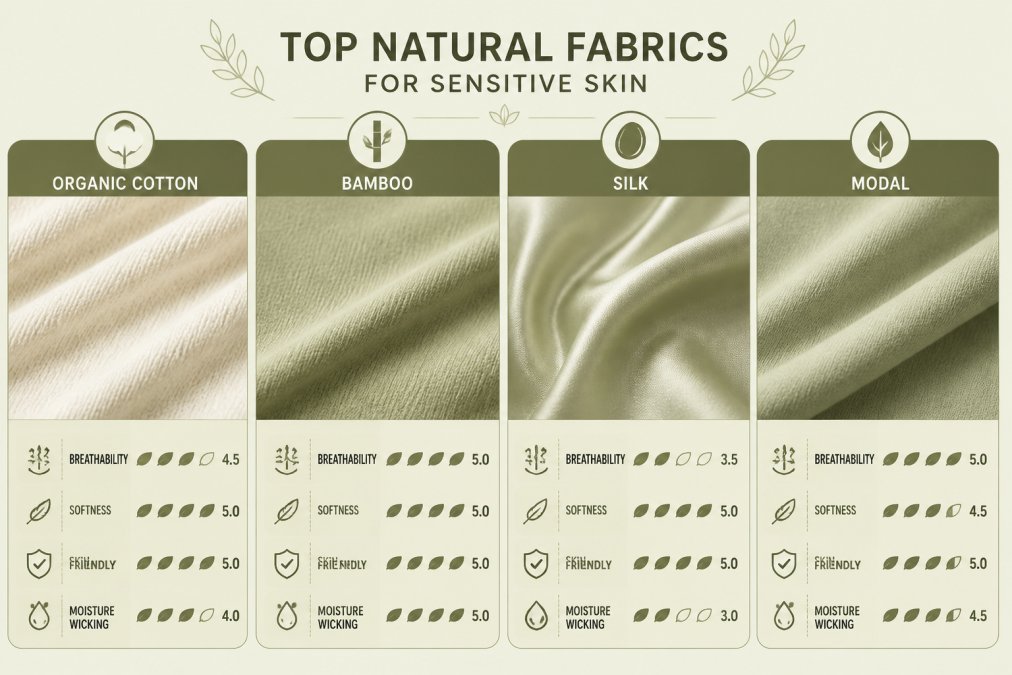
Silk: The Hypoallergenic Choice
Silk is a protein fiber, not a plant fiber like cotton or bamboo. This structural difference makes it uniquely hypoallergenic. Silk doesn't harbor dust mites or bacteria the way synthetic materials do, and it doesn't require harsh chemical finishes to feel soft.
The smooth surface of silk reduces friction against your skin. When you're doing downward dog or moving through other yoga poses, silk moves with your body rather than catching and pulling. This frictionless movement prevents the irritation that comes from repetitive rubbing against synthetic fabrics.
Silk also has natural moisture-wicking properties and excellent breathability. It's cooler to the touch than cotton and doesn't trap static electricity the way synthetics do. For people with sensory processing sensitivities or severe eczema, silk can be transformative, though its cost makes it less practical for everyday wear.
Tencel and Modal: Lyocell Alternatives
Tencel (branded lyocell) and Modal are both made from wood pulp using closed-loop processes that minimize chemical waste. They're considered sustainable alternatives to conventional rayon. Both fabrics are exceptionally soft and breathable, making them excellent choices for sensitive skin.
Lyocell fibers have a unique structure that creates exceptional moisture management. The fabric absorbs moisture quickly and releases it just as fast, preventing the damp-against-skin feeling that triggers irritation. Modal is slightly softer than Tencel but less durable; Tencel is more strong and maintains its properties through repeated washing.
For best breathable fabrics for sensitive skin, Tencel represents the sweet spot between sustainability, performance, and cost. It's softer than organic cotton, more durable than Modal, and significantly less expensive than silk.
Benefits of Bamboo Fabric for Sensitive Skin
The benefits of bamboo fabric for sensitive skin extend beyond simple comfort. Bamboo viscose is processed in a way that preserves the fiber's natural properties while creating a fabric that actively supports skin health.
Moisture-wicking is the primary benefit. Bamboo pulls sweat away from your skin three times faster than cotton, keeping your skin surface dry. Dry skin means less opportunity for bacterial growth, fewer friction points, and reduced irritation during movement.
The anti-bacterial properties of bamboo are inherent to the fiber, not added through chemical treatment. This means your skin isn't exposed to antimicrobial agents that can themselves trigger irritation. The fabric stays fresher longer without needing harsh laundry chemicals to maintain hygiene.
Thermal regulation in bamboo fabric creates a stable microclimate against your skin. During intense workouts, this prevents the temperature spikes that trigger eczema flare-ups. Between workouts, it keeps you warm without overheating, which is especially important for people whose skin reacts to temperature extremes.
Fabrics to Avoid for Sensitive Skin
Synthetic materials are the primary culprit in fabric-related skin irritation. Polyester, nylon, and acrylic trap heat and moisture, create static electricity, and often contain chemical residues from manufacturing that never fully wash out.
The synthetic blend trap is real. A fabric labeled as "95% cotton, 5% spandex" sounds safe, but the 5% spandex can trigger irritation in highly sensitive individuals. More problematic are fabrics marketed as "cotton blend" that contain 30-50% synthetic content. The synthetic portion dominates moisture management and breathability, negating the benefits of the cotton.
Fleece and microfiber fabrics are especially problematic. They trap moisture, create static electricity, and their tiny fiber diameter can physically irritate sensitive skin. Avoid them entirely if you have eczema or dermatitis.
Chemical finishing is where many "natural" fabrics go wrong.
Best Non-Synthetic Yoga Leggings 2026
When choosing best non-synthetic yoga leggings 2026, focus on fiber content first, then construction quality. The ideal legging for sensitive skin uses organic cotton or bamboo viscose as the primary fiber, with minimal elastane (no more than 5-8%) for stretch.
How to Wash Clothes for Sensitive Skin
Washing technique is half the battle when you have sensitive skin. Even the best breathable fabrics for sensitive skin will trigger irritation if you wash them incorrectly.
Chemical Finishing and Processing: What Matters
The difference between a fabric that irritates and one that doesn't often comes down to how it was processed. Chemical finishing is the hidden variable most guides ignore.
Breathability, Moisture-Wicking, and Thermal Regulation
These three properties work together to create an environment where sensitive skin thrives. Understanding how they interact helps you choose fabrics that actually work.
| Property | Organic Cotton | Bamboo Viscose | Silk | Synthetic Blends |
|---|---|---|---|---|
| Breathability | Excellent | Excellent | Very Good | Poor |
| Moisture-Wicking | Good | Excellent | Good | Poor |
| Thermal Regulation | Good | Excellent | Excellent | Poor |
| Hypoallergenic | Yes | Yes | Yes | No |
| Cost | Moderate | Moderate | High | Low |
| Durability | Excellent | Very Good | Good | Fair |
Frequently Asked Questions
What is the best fabric for sensitive skin?
Organic cotton, bamboo viscose, and silk are the top choices for sensitive skin. These natural fibers are hypoallergenic, breathable, and free from harsh chemical residues. Organic cotton is dermatologist-tested, bamboo viscose offers superior moisture-wicking, and silk minimizes friction against the skin. The best choice depends on your climate and activity level, but all three support your skin barrier without triggering irritation or dermatitis.
Which is better for eczema, bamboo or cotton?
Both work well for eczema-prone skin, but bamboo viscose (lyocell) often edges ahead due to its exceptional moisture-wicking and breathability. Bamboo absorbs moisture faster than cotton, reducing the damp environment that can trigger flare-ups. Organic cotton is gentler in terms of chemical residues and is widely dermatologist-recommended. For eczema, the key is choosing OEKO-TEX certified versions of either fabric to ensure minimal chemical finishes that could irritate your skin barrier.
What fabrics should I avoid if I have sensitive skin?
Avoid synthetic materials like polyester, acrylic, and nylon blends, which trap heat and moisture, creating friction that irritates sensitive skin. The 'synthetic blend' trap, mixing natural fibers with synthetics, often provides the worst of both worlds. Also skip fabrics treated with heavy chemical finishes, flame retardants, or dyes without certification. Wool can cause irritation unless it's merino wool with a very fine fiber diameter. Always check for OEKO-TEX certification to confirm low chemical residues.
How does fabric breathability affect sensitive skin?
Breathability directly impacts skin health by allowing moisture to evaporate rather than trapping sweat against your skin. Poor breathability creates a damp environment that weakens your skin barrier and triggers irritation, dermatitis, and eczema flare-ups. Breathable fabrics with good moisture-wicking properties maintain thermal regulation and reduce friction. Natural fibers like bamboo and organic cotton excel here because their weave structure and fiber diameter allow air circulation, keeping skin dry and comfortable during activity.